

Portuguese wine, know the basics
Portugal is a country known for being a tourist destination of excellence, where its visitors can enjoy a pleasant climate in the European context, breathtaking landscapes, paradisiacal beaches, wonderful natural reserves, world-renowned hospitality, vibrant cities and localities that preserve Portuguese experiences and traditions.
In addition to the factors that captivate the eyes of visitors, Portugal is also known for the quality of its products and gastronomy, namely wine, which takes the name of Portugal to the four corners of the world.
Portugal is currently the 11th largest wine producer in the world, representing an average of 3% of all world production. Known for its diversity of types and grape varieties, wine in Portugal is produced all over the country, but 14 demarcated wine regions are identified: Vinho Verde, Trás-os-Montes, Douro, Távora-Varosa, Bairrada, Dão, Beira Interior, Lisboa, Tejo, Península de Setúbal, Alentejo, Algarve, Madeira, Açores.
…every sip is a celebration of the country’s rich winemaking heritage.
Portuguese wine regions exude a harmonious classification, reflecting the country’s dedication to the art of winemaking. Embracing the spirit of positivity, we have three levels of classification that add a touch of magic to the wine experience:
1. Denominação de Origem Controlada (DOC): At this pinnacle of classification, we find quality wines lovingly crafted in specific regions, adhering to the esteemed European Union wine regulations. These wines are a true testament to the artistry of winemaking, showcasing the unique character of their terroir.
2. Indicação de Proveniência Regulamentada (IPR): Like students in training, IPRs are the aspiring DOC candidates, seeking to reach the pinnacle of quality wines. Produced in specified regions, they are a glimpse into the future, as they strive to meet the high standards set by their DOC counterparts.
3. Vinho Regional (VR): With open arms, VRs encompass larger areas, inviting us to explore the beauty and diversity of Portuguese wines on a regional level. Much like the French Vin de pays, these wines delight with their charm, offering a broad range of tastes and experiences.
Embrace the joy of discovery as you traverse through these delightful classifications, each adding a unique flavor to the world of Portuguese wines. From the exquisite DOCs to the aspiring IPRs and the enchanting VRs, every sip is a celebration of the country’s rich winemaking heritage. So, raise your glass and toast to the positivity that flows through the heart of Portugal’s wine culture, where each drop tells a story, and every moment is a celebration of life’s delights. Cheers to the beauty of diversity, and may your journey through the world of Portuguese wines be filled with wonder and happiness!
Get to know the wine regions better
Vinho Verde
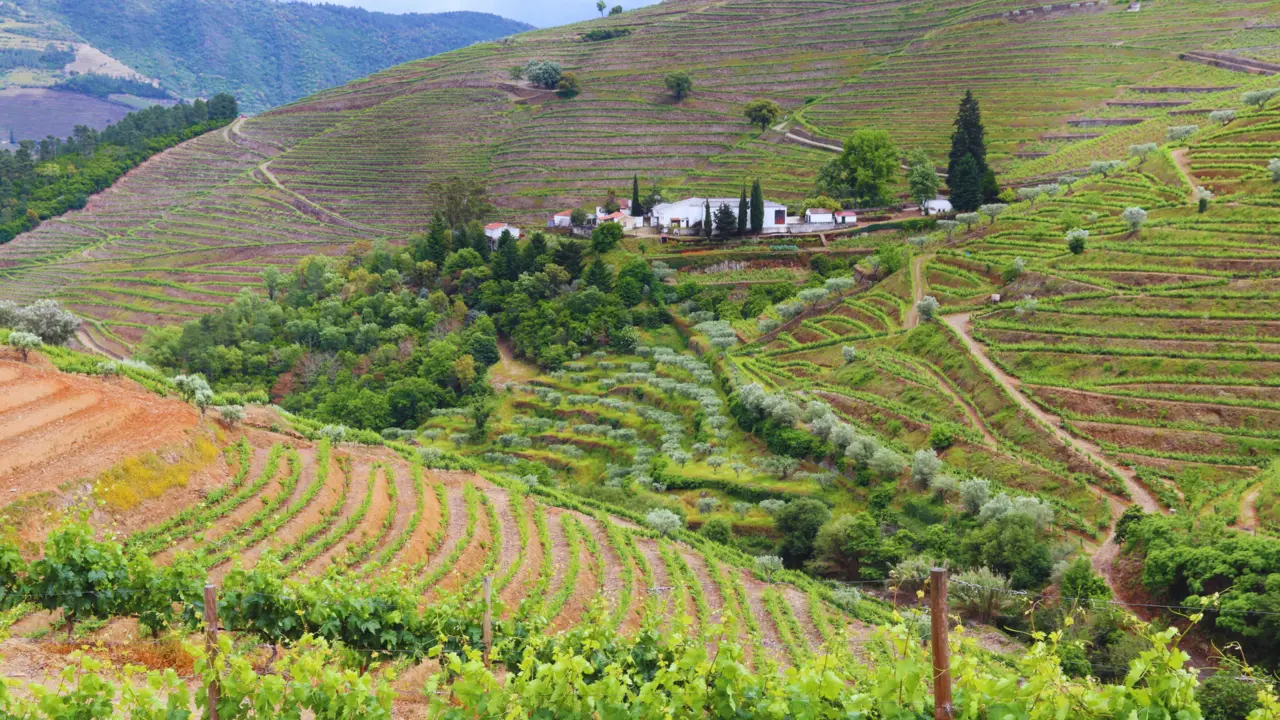
The Vinho Verde region has been demarcated since 1908 and is located in the extreme north of mainland Portugal, being delimited to the north by the river Minho, extending along the Atlantic coast to the city of Porto, and to the south to the banks of the river Vouga. It is the largest Portuguese demarcated area and one of the largest in Europe.
The natural conditions of this region are ideal for the production of excellent white wines, as well as sparkling wines and spirits. The sparkling wines of Vinho Verde have revealed a surprising quality, while the organoleptic characteristics of the bagasse and wines of the region show excellent technical conditions for the production of great marc brandies and excellent wine spirits.
Orographically, the region presents itself as “a vast amphitheater that, from the seafront, gradually rises inland”, exposing the entire area to the influence of the Atlantic Ocean. This Atlantic influence, the soils mostly of granite origin, the mild climate and high rainfall, translate into the freshness, lightness and elegance of the wines of this region.
The region is divided into nine sub-regions: Amarante, Ave, Baião, Basto, Cávado, Lima, Monção and Melgaço, Paiva and Sousa. The dominant white varieties are Alvarinho, Arinto, Azal, Loureiro, Avesso and Trajadura, while in the reds the Borraçal, Espadeiro, Brancelho and Vinhão varieties stand out.
Trás-os-Montes
Trás-os-Montes is a historic region of Portugal, located in the northeast of the country, bordering Spain. The region is known for its natural beauties, cultural traditions and gastronomy.
The wine region of Trás-os-Montes is divided into three sub-regions: Chaves, Valpaços and Planalto Mirandês. The implantation of the vineyard in the sub-region of Chaves is on the slopes of small valleys, where the tributaries of the river Tâmega flow. The plateau of the Valpaços sub-region is rich in water resources.
The wines of this region are known for their diversity and quality. White wines have an aromatic balance, while red wines are well structured.
Douro
The Douro region is located in the northeast of Portugal, surrounded by the Marão and Montemuro mountains. The wine-growing area occupies around 40,000 hectares, despite the fact that the region extends over around 250,000 hectares.
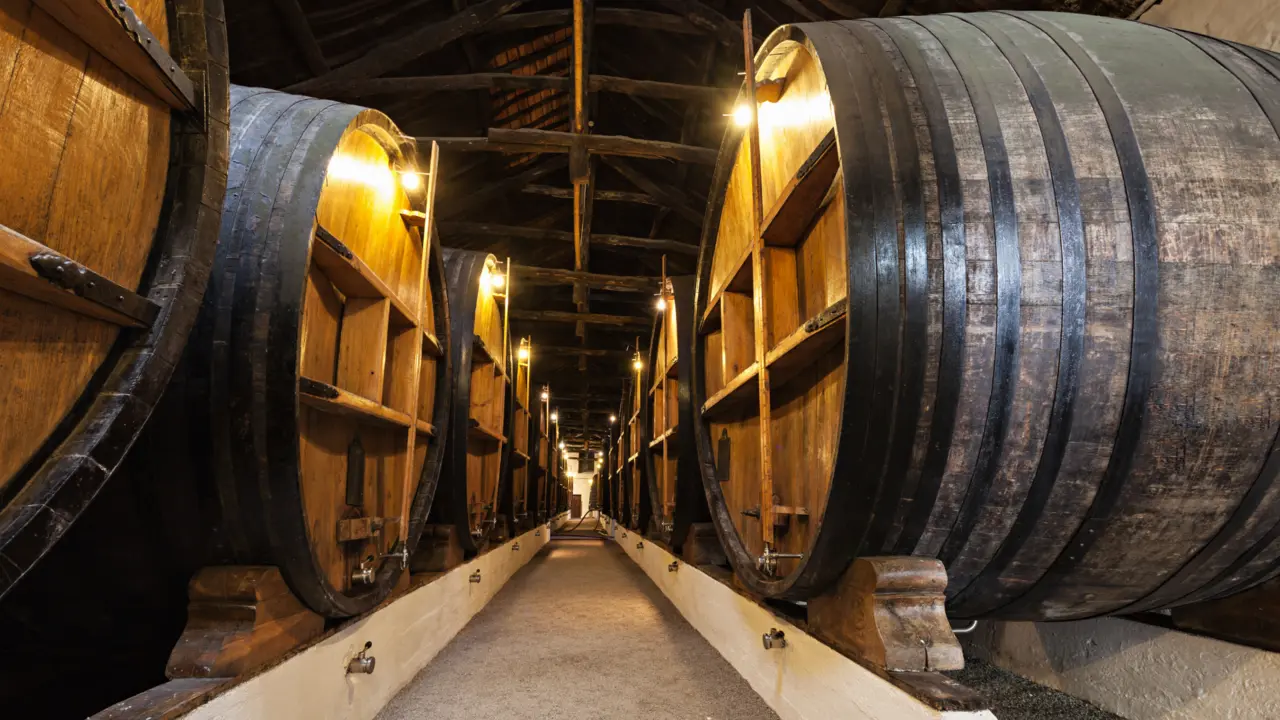
The region is known for Port Wine and is one of the oldest wine regions in the world. A large part of its territory is part of the Alto Douro Wine Region, marked by the production of Port Wine and declared a World Heritage Site by UNESCO.
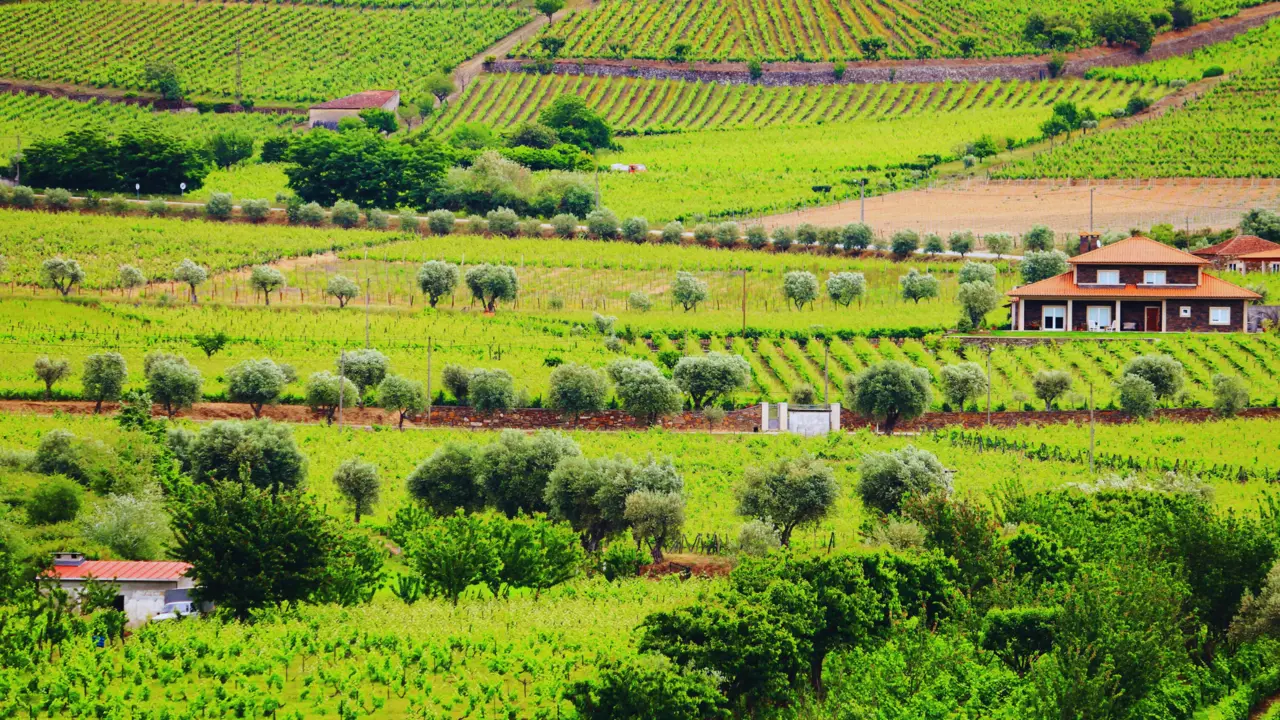
The vast majority of wines result from a blend of various grape varieties, with a unique complexity and richness, which give them a characteristic profile of the Douro.
The red wines are produced from indigenous grape varieties such as Touriga Nacional, Touriga Franca, Aragonez, Tinta Barroca and Tinta Cão. In the Douro there are also great white wines to be discovered. Dry wines are produced by blending various varieties such as Malvasia Fina, Viosinho, Gouveio (Verdelho) and Rabigato.
Távora-Varosa
The Távora-Varosa region is recognized for its unique heritage, where, in the 12th century, the Cistercian Monks built monasteries such as São João de Tarouca. The two rivers, Távora and Varosa, give the name to the region that brings together the municipalities of Moimenta da Beira, Sernancelhe, Tarouca and also some parishes in the municipalities of Penedono, São João da Pesqueira, Tabuaço, Armamar and Lamego.
The Távora-Varosa Region is especially suited to the production of sparkling wines. This production dates back to the 17th century, the year 1678, by the aforementioned Cistercian monks, becoming, in 1989, the first national wine-growing region to be demarcated for the production of DOC sparkling wine.
With unique edapho-climatic characteristics, its vineyards are planted in granite soils, litholic soils and transitional soils, bringing together excellent conditions for the creation of generally fresh wines, and with ideal acidity levels for the production of the best national wines and sparkling wines.
Bairrada
Bairrada is a Portuguese wine region located in Beira Litoral, which extends between Águeda and Coimbra to the dunes of the Atlantic coast. The region is known for its full-bodied reds, whites and sparkling wines.
The wines from the Bairrada region are made from traditional varieties, such as the abundant Baga, and others imported to Portuguese soil, such as the international Cabernet Sauvignon. The Bairrada region produces wines of full color with a generous volume rich in acids. Bairrada wine is essential for a pleasant gastronomic experience in the region.
Dão
The Dão region is located in Beira Alta, in central Portugal. The region has a geographical area of around 376,000 hectares and covers several municipalities in the districts of Coimbra, Guarda and Viseu. The region is protected from the influences of the winds by the Caramulo, Montemuro, Buçaco and Estrela mountains.
The region has a cold and rainy climate in winter and hot and dry in summer, excellent conditions for the production of quality wines.
The Dão region is known for its complex and fragrant wines. The terroir of wines from the Dão region gives its varieties an intense and balanced flavor. Aragonez, Jaen or Alfrocheiro are some examples of the varieties responsibles for the Portuguese Dão wine.
White wines from the Dão region have a citrus color and a fruity and complex aroma, typically smooth and fresh, with balanced acidity. Common grape varieties for the production of white wines in the Dão region include Barcelo, Bical, Cerceal-Branco, Encruzado, Malvasia-Fina, Rabo-de-Ovelha, Terrantez, Uva-Cão and Verdelho.
Beira Interior
The Beira Interior wine region is located in the heart of the interior of the country, in the most mountainous region of mainland Portugal.
The Beira Interior wine region is located in the heart of the interior of the country, in the most mountainous region of mainland Portugal, with some of the highest mountains in Portugal. The climate suffers from an extreme continental influence, with important temperature variations, short, hot and dry summers, and prolonged and very cold winters. The soils are mostly granite, with small patches of schist (a result of the region’s rugged and mountainous terrain) and, although uncommon, sandy patches.
The Denomination of Origin Beira Interior was created on November 2, 1999, the result of the aggregation of the regions of Castelo Rodrigo, Cova da Beira and Pinhel, which have since become sub-regions. The region has a historic winemaking past that dates back to the foundation of Portuguese nationality, has around 16,000 hectares of vineyards and a wide variety of grape varieties.
The wines from Beira Interior are influenced by the mountains, surrounded by the Serra da Estrela, Marofa and Malcata and by the altitude with variations between 400 and 700 meters and consequently by the composition of the soil and the very harsh climate of the region, with negative temperatures and sometimes snow in winter and very hot and dry summers.
This combination of factors results in white wines of great aromatic exuberance and a lot of freshness and, in the reds, wines with complex aromas of berries and spices, combined with a remarkable freshness. This region produces white, red, rose and straw wines, as well as quality natural sparkling wines.
Lisboa
The wine region of Lisbon, formerly known as Estremadura, is located northwest of Lisbon in an area of about 40 km. The climate is temperate due to the Atlantic influence. Summers are cool and winters mild, although the areas further away from the sea are a little colder.
The Lisbon region produces a huge variety of wines, made possible by the diversity of relief and microclimates concentrated in the region. The vines are heavily influenced by the sea and winds as they are so close to the Atlantic coast, but there are also vines planted further inland, protected by mountains.
Wines from the Lisbon region are known for their diversity of flavors, thanks to the wide variety of grape varieties used and the different climatic and geographical conditions present in the region. It is difficult to describe the flavor of Lisbon wines in general terms, as each wine has its own unique characteristics. The best thing would be to try the region’s wines to discover their flavors and aromas.
With a vineyard area of approximately 18 thousand hectares, the region has 9 Denominations of Controlled Origin (DOC): Alenquer, Arruda, Bucelas, Carcavelos, Colares, Encostas d’Aire, Lourinhã, Óbidos and Torres Vedras. It also has the homonymous Protected Geographical Indication (IGP), which translates into Regional Lisbon wine.
Tejo
The Tejo region is located in the heart of Portugal. It is a wine region located next to the Tejo River, which gives it its name. The region is made up of several municipalities, including Tomar, Ferreira do Zêzere, Sardoal and Mação to the North; Abrantes, Chamusca, Alpiarça and Almeirim to the east; Torres Novas, Alcanena, Rio Maior, Cartaxo and Azambuja to the west; and Coruche and Benavente to the south.
The Tejo region is recognized as an area for the production of high-class wines. The region comprises a total of 17,000 hectares that annually produce around 650,000 hectoliters, which represents around 10% of the national total.
Tejo wines are produced by passionate producers, known throughout the country for their energy and determination. The region is rich in history and tradition, with the art of producing wine dating back to 2000 BC, when the Tartessians started planting vines along the banks of the river that gives it its name.
The Tejo region is recognized for the combination of national and international grape varieties. With regard to white wines from the Tejo, they are used from Chardonnay and Sauvignon Blanc to Arinto. However, the national variety Fernão Pires is distinguished from the others by its high production. Tejo wines are historically associated with various national varieties and more recently with the combination of these with international varieties such as Cabernet Sauvignon, Merlot or Syrah.
Península de Setúbal
The Setúbal Peninsula is a wine region located south of Lisbon, in the municipalities of Palmela, Setúbal, Montijo and Alcácer do Sal. The region has two types of landscapes: one with vineyards planted in clayey-limestone soils, protected by the slopes of the Serra da Arrábida, and another that covers flat land or with gentle undulations made up of sandy soils, poor and perfectly adapted to the production of high quality grapes. The climate is temperate Mediterranean with hot, dry summers and mild, rainy winters. The average annual relative humidity is high due to the proximity of the sea.
The wine region comprises two Denominations of Origin: Palmela and Setúbal, in addition to the designation of regional wines Península de Setúbal. The designation “Setúbal” is reserved for Moscatel de Setúbal and Moscatel Roxo wines. The region is known for the production of the famous Moscatel de Setúbal liqueur wine.
The Setúbal Peninsula region produces a wide variety of wines, including white, red, rosé, sparkling, sparkling and liqueur wines. The most famous wine in the region is Moscatel de Setúbal, a fortified wine. The main grape variety is Castelão (known in the Setúbal Peninsula region as Periquita), which is dominant in the main red wines of Palmela. Other red varieties recommended for DOC Setúbal and Palmela include Aragonez, Bastardo, Touriga Franca, Touriga Nacional, Trincadeira, Moscatel Roxo, Alicante Bouschet, Aragonez, Tinta Miúda and Tinta Cão. The main white varieties include Antão Vaz, Arinto, Fernão Pires, Malvasia Fina, Roupeiro, Viosinho, Alvarinho and Verdelho
Alentejo
The Alentejo region is located in southeastern Portugal, between the cities of Portalegre and Beja. It is the largest natural region in Portugal, with an area of 26,158 km², which corresponds to 29% of the total area of the country. Geographically, Alentejo is limited to the north by the Tagus River, to the east by Spain, to the south by the Algarve and to the west by the Atlantic Ocean.
The Alentejo is a vast and varied region, with a unique landscape, marked by cork oaks and vast horizons. The climate of Alentejo is Mediterranean, with hot, dry summers and mild, rainy winters. The average annual temperature for the Alentejo is 18 degrees and 402 mm of rain fall in one year, it does not rain for 233 days a year and the average humidity is 71%.
It is one of the biggest wine regions in Portugal, but only 5% of the region is dedicated to wine production. The region is divided into 8 sub-regions: Borba, Évora, Granja/Amareleja, Moura, Portalegre, Redondo, Reguengos and Vidigueira. The Comissão Vitivinícola Regional Alentejana (CVRA) was created in 1989 to certify, control, protect and promote DOC Alentejo wines and Regional Alentejano wines.
The history of wine and vineyards in Alentejo is long and rich. Unfortunately, it has not yet been possible to determine precisely when and by whom the vine culture was introduced in the Alentejo. What is known is that when the Romans arrived in the territory that is now Alentejo, the culture of wine and vineyards were already part of the habits and traditions of the local populations. It is presumed that the Tartessos, the Iberian civilization that inherited the impressive Andalusian megalithic culture, were the first and main drivers of the domestication of the vine and the subsequent introduction of wine in the region.
The Greeks, whose presence is denounced by the hundreds of amphoras cataloged in the archaeological finds of the south of Portugal, succeeded the Phoenicians in the trade and exploitation of Alentejo wines. However, it was with the Romans, deeply literate in the main agricultural techniques, that the culture of wine in Alentejo became widespread. It is even likely that Alentejo production provided the first export of Portuguese wines to Rome.
The Roman influence was so decisive for the development of Alentejo viticulture that even today, two thousand years after the annexation of the territory, the marks of Roman civilization continue to be visible in everyday tasks.
Alentejo wines are known for their quality and diversity. The most traditional grapes used to produce Alentejo wines are Trincadeira, Aragonez, Castelão and Alfrocheiro. Although it is not so traditional in the production of white wines, Arinto and Antão Vaz grapes are also grown, which can develop good examples of this type of drink.
The Alentejo region has a great diversity of soil and climate within the same region, each with its uniqueness expressed in its bottles. The predominant soils are shale, clay, marble, granite and limestone. You can find a list of reds, whites and rosés from Alentejo wines on the official website of the Comissão Vitivinícola Regional Alentejana.
Algarve
The Algarve is a region located in the extreme south of mainland Portugal. It is a well-defined area, with its own characteristics, given by the proximity to the sea, the climate, the natural vegetation and the culture marked by the long Arab occupation.
The demarcated wine region of the Algarve dates back to 1980 and produces red, white, rosé and liqueur wines. In the Algarve there are four regions that produce wine with Denomination of Origin, namely Lagoa, Lagos, Portimão and Tavira.
The regional wines of the Algarve region are characterized by being soft, not very acidic and slightly alcoholic, with reds having a defined or garnet color and whites having a straw colour. The white and red wines are characterized by aromas of very ripe fruit and a velvety, warm flavor. Included in the Vinho Regional Algarve, this region also produces a liqueur wine, of great tradition, with the geographical indication Algarve.
Madeira
Madeira is considered to be one of the rootstocks of the Portuguese wine industry. Vines were first brought to Madeira by English settlers in the 15th century. At first, Madeira winemakers still produced white and red wines, however since the 18th century, this wine region has become internationally renowned specifically for its fortified wines.
The Madeira wine region is located on the island of Madeira, which has a total area of 732 km² and the extension of the wine region is about 500 hectares. The vines of the Madeira wine region are mainly grown on traditional pergolas.
The island of Madeira has a subtropical climate that is perfect for those who like the sun and travel at any time of the year. With average temperatures ranging between 18ºC and 24ºC, Madeira enjoys a lot of sun and a little rain. As you travel around the island, due to its orography, you can find different microclimates and unique landscapes.
The region is known for its famous Madeira Wine, a fortified wine produced in the Cerceal, Verdelho, Boal and Malvasia varieties, which are vinified in order to provide different degrees of sweetness, marketed in a dry, semi-dry, semi-sweet and sweet style respectively. The most planted variety on the island is Tinta Negra, an easily adaptable red variety, capable of adapting to the four styles of sweetness.
Açores
The Azores is an archipelago made up of nine islands in the middle of the Atlantic Ocean. The climate in the Azores is oceanic, with high levels of humidity, thermal amenity, regular rainfall and strong winds. The four seasons of the year are recognizable, but the average annual temperature is 21 degrees and the insolation is low.
Vine cultivation dates back to the same century of its occupation, in the 15th century. In the 17th and 18th centuries, wines produced in the Azores, namely those produced on the island of Pico, were exported to Russia and most countries in northern Europe.
In the Azores, only on three islands does the cultivation of vines take on a special meaning. The Denominations of Origin created in 1994 are: Graciosa, Biscoitos and Pico. In Graciosa, white wine is produced from Verdelho (the most famous and most cultivated), Arinto, Terrantez, Boal and Fernão Pires grape varieties. On Terceira Island, in the region of Biscoitos, the Verdelho, Arinto and Terrantez grape varieties are used to make fortified wine. The Verdelho, Arintoo and Terrantez varieties are used in Pico.
Although the island of São Miguel is not one of the three Azorean islands with Denomination of Origin, wine is still produced on the island. An example is the wine “Quinta da Jardinete”, produced on the north coast of the island of São Miguel.
What are the ideal accompaniments to taste Portuguese wine?
There are many side dish options to taste Portuguese wine. For smooth red wines, mature cheeses like gorgonzola, provolone and parmesan are good options, as well as smoked meats, breads and toast. As for dry red wines, pasta, pizza, lamb or red meat with spicy sauces are good options. For white wines, fish and seafood are good options. If the drink is light, prefer risottos and fruits.
Enjoy Portuguese wines and take care
Portugal, even though it is a small country, manages to be one of the largest wine producers in the world, due to the particularity of its climate, namely due to the specific microclimates found throughout its territory, from the mainland to its Atlantic islands. This climate, which grows the grapes the right way, attracts many tourists looking for a milder climate, stunning landscapes and beaches, rich cuisine and warm hospitality that makes visitors feel at home. If you are visiting Portugal, be sure to try the nectar that the gods lent the Portuguese people, and remember that if you are driving, drink in moderation.
In Portugal, the permitted blood alcohol level is as follows:
It is forbidden to drive with a blood alcohol level equal to or greater than 0.5 g/l – “ordinary” drivers (not included in the list indicated in the next point).
It is prohibited to drive with a blood alcohol level equal to or greater than 0.2 g/l – new drivers (during the first 3 years of validity of the driving licence), driver of rescue or urgent service vehicles, public transport for children and young people up to the age of 16, taxis, heavy passenger or goods cars, or transporting dangerous goods.
Know more about Portugal driving laws in the website portugaldrivinglaws.com dedicated to this specific subject.Do you want to know more about the history of Portuguese wine? Check: “The history of Portuguese wine: From Tartessians to nowadays”. If you want to refine your wine tasting skills during your visit to Portugal check: “How to recognize a good Portuguese wine”.